Table of Contents
The digital product industry is growing faster than ever, giving creators, freelancers, and entrepreneurs new opportunities to build an online income. Whether you sell Canva templates, eBooks, printables, online courses, or digital planners, choosing the right platform can make a huge difference in your success.
With so many options available, finding the best platform to sell digital products can feel overwhelming. Some platforms are beginner-friendly, while others offer advanced features for scaling a business. Transaction fees, customization options, marketing tools, and audience reach are all important factors to consider before making a decision.
In this guide, we’ll explore the best platforms to sell digital products in 2026, compare their features, and help you choose the right option based on your goals. Whether you’re just starting out or looking to grow an existing business, you’ll find a platform that fits your needs.
What Is a Digital Product?
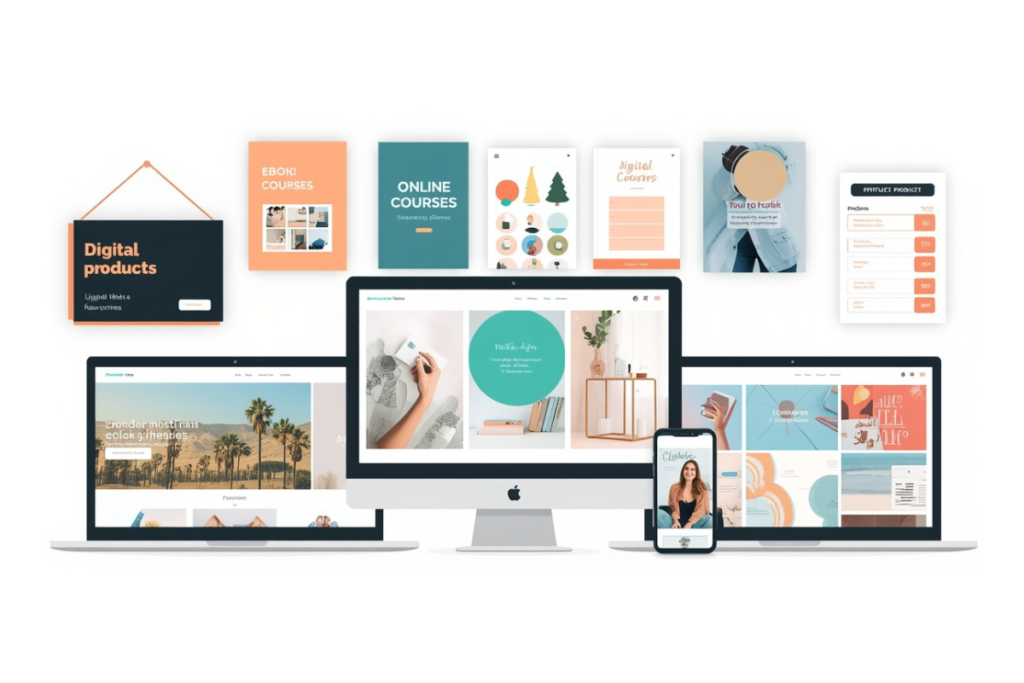
A digital product is any item that can be created, sold, and delivered online without the need for physical inventory or shipping. Customers can purchase and download these products instantly, making digital products one of the most profitable and scalable business models available today.
Unlike physical products, digital products can be sold repeatedly without additional production costs. This allows creators to generate passive income while reaching customers worldwide.
Some popular examples of digital products include:
- Canva templates
- eBooks
- Printable planners
- Digital journals
- Online courses
- Workbooks and guides
- Stock photos and graphics
- Social media templates
- Presets and digital downloads
Because of their low startup costs and unlimited earning potential, digital products have become increasingly popular among bloggers, designers, content creators, and small business owners. The key to success, however, is choosing the best platform to sell digital products and creating a strategy to attract the right audience.
Things to Consider Before Choosing a Platform

Not all platforms are created equal. The best platform to sell digital products depends on your goals, budget, and the type of products you plan to offer. Before making a decision, it’s important to evaluate several factors that can affect your long-term success.
Ease of Use
If you’re just getting started, choose a platform that is easy to set up and manage. A beginner-friendly interface can save time and help you focus on creating and selling products rather than dealing with technical issues. Platforms with simple dashboards, built-in tools, and straightforward product uploads are ideal for new creators.
Transaction Fees
Every platform has its own pricing structure. Some charge listing fees, while others take a percentage of each sale or require a monthly subscription. Understanding these costs is important because high fees can reduce your profit margins. Always compare transaction fees and hidden charges before committing to a platform.
Customization Options
Branding plays a major role in building trust and standing out from competitors. Some platforms allow you to customize your storefront, add your logo, and create a unique shopping experience. If building a recognizable brand is important to you, choose a platform that offers flexible design and customization features.
Marketing Features
Selling digital products is easier when your platform includes built-in marketing tools. Features like email marketing integrations, discount codes, upsells, affiliate programs, and SEO settings can help increase visibility and boost sales. Strong marketing capabilities are essential for long-term growth.
Audience Reach
Some platforms come with an existing customer base, making it easier to attract buyers. Marketplaces such as Etsy provide access to millions of shoppers, while self-hosted platforms require you to generate your own traffic through Pinterest, blogging, social media, or email marketing. Understanding how you’ll reach potential customers is an important part of choosing the right platform.
Payment Methods
Offering multiple payment options can improve the customer experience and increase conversions. Look for platforms that support popular payment methods such as PayPal, Stripe, credit cards, and international payments. The more convenient the checkout process, the easier it is to make sales.
Scalability
Think beyond your current needs. The best platform to sell digital products should support your business as it grows. Whether you plan to expand your product catalog, build a brand, or increase your monthly sales, choosing a scalable platform can save you from switching systems later. Features like automation, analytics, and advanced integrations become increasingly valuable as your business grows.
Best Platforms to Sell Digital Products
Choosing the best platform to sell digital products depends on your business goals, budget, and marketing strategy. Some platforms are designed for beginners, while others offer advanced features for growing a long-term brand. Here are the top platforms to consider in 2026.
1. Etsy
Best for Beginners
Etsy is one of the most popular marketplaces for selling digital products. It already has millions of active buyers searching for printables, templates, planners, and other digital downloads. This makes it an excellent option for creators who want to start selling quickly without building their own audience.
Pros
- Beginner-friendly platform
- Large built-in customer base
- Easy product listing process
- Great for printables and Canva templates
Cons
- Listing and transaction fees
- High competition
- Limited control over branding
2. Gumroad
Best for Creators and Freelancers
Gumroad allows creators to sell digital products directly to their audience. It’s a popular choice among writers, designers, and content creators because of its simplicity and low setup requirements.
Pros
- Easy to use
- No monthly fee to get started
- Supports memberships and subscriptions
- Simple checkout experience
Cons
- Limited store customization
- Transaction fees can add up
- Fewer advanced features compared to Shopify
3. Payhip
Best for Low-Cost Selling
Payhip is a beginner-friendly platform that helps creators sell digital products, courses, and memberships. It provides useful marketing features without requiring a large investment.
Pros
- Free plan available
- Built-in affiliate system
- Discount codes and coupons
- Easy product delivery
Cons
- Limited customization options
- Advanced features require paid plans
- Smaller ecosystem compared to Shopify
4. Shopify
Best for Building a Brand
Shopify is ideal for entrepreneurs who want complete control over their online business. It allows you to create a professional store and scale your brand over time.
Pros
- Full control over branding
- Powerful marketing tools
- Thousands of apps and integrations
- Highly scalable
Cons
- Monthly subscription cost
- Requires traffic generation
- More setup compared to marketplaces
5. Stan Store
Best for Creators and Influencers
Stan Store is designed for creators who sell products through social media platforms. It offers a simple way to monetize audiences without creating a traditional website.
Pros
- Easy setup
- Mobile-friendly
- Perfect for creators and influencers
- Supports digital products and courses
Cons
- Monthly fees
- Limited customization
- Smaller feature set compared to Shopify
6. Sellfy
Best for Simple Online Stores
Sellfy provides an easy solution for selling digital products and physical products from one place. It focuses on simplicity and automation.
Pros
- User-friendly dashboard
- Supports digital and physical products
- Built-in email marketing
- Fast setup
Cons
- Monthly subscription required
- Limited design flexibility
- Fewer third-party integrations
7. Creative Market
Best for Designers
Creative Market is a marketplace where designers can sell fonts, templates, graphics, and digital assets to a creative audience.
Pros
- Access to design-focused buyers
- Ideal for templates and graphics
- No need to build traffic initially
Cons
- Competitive marketplace
- Limited control over branding
- Revenue depends on marketplace visibility
8. WooCommerce
Best for WordPress Users
WooCommerce is a powerful solution for those who already have a WordPress website. It gives complete control over products, branding, and marketing.
Pros
- Free plugin
- Full ownership of your store
- Highly customizable
- Excellent for SEO
Cons
- Requires hosting and maintenance
- Learning curve for beginners
- Some features require paid plugins
9. Podia
Best for Courses and Memberships
Podia is built for creators who want to sell online courses, memberships, webinars, and digital downloads from one platform.
Pros
- Beginner-friendly interface
- Email marketing tools included
- Supports memberships and communities
- No coding required
Cons
- Monthly subscription fee
- Limited customization
- Fewer integrations than Shopify
10. Pinterest (Marketing Platform)
Is Pinterest a Platform for Selling Digital Products?
Pinterest is not a marketplace like Etsy or Gumroad, but it is one of the most powerful platforms for driving traffic to your products. Instead of processing sales directly, Pinterest helps potential customers discover your content and visit your store.
How Can You Get Free Traffic from Pinterest?
Pinterest works like a visual search engine. By creating SEO-optimized pins and targeting the right keywords, creators can generate consistent traffic for months or even years. Unlike social media posts that disappear quickly, Pinterest pins have a much longer lifespan and can continue bringing visitors over time.
How to Use Pinterest with Etsy, Shopify, and Payhip
Pinterest works best when combined with selling platforms. You can create keyword-rich pins that lead directly to your Etsy listings, Shopify store, or Payhip products. This strategy allows you to attract organic traffic without relying solely on paid advertising.
For many creators, Pinterest acts as a long-term marketing tool that helps increase visibility, generate leads, and drive more sales. When used correctly, it can become one of the most valuable traffic sources for a digital product business.
Comparison Table
| Platform | Best For | Fees | Beginner Friendly |
|---|---|---|---|
| Etsy | Beginners and handmade/digital product sellers | Listing fee + transaction fees | ⭐⭐⭐⭐⭐ |
| Gumroad | Creators and freelancers | Free plan available, transaction fees apply | ⭐⭐⭐⭐⭐ |
| Payhip | Low-cost selling | Free plan available, percentage fee on free plan | ⭐⭐⭐⭐⭐ |
| Shopify | Building a long-term brand | Monthly subscription | ⭐⭐⭐⭐ |
| Stan Store | Creators and influencers | Monthly subscription | ⭐⭐⭐⭐⭐ |
| Sellfy | Simple online stores | Monthly subscription | ⭐⭐⭐⭐ |
| Creative Market | Designers and creative assets | Commission-based fees | ⭐⭐⭐⭐ |
| WooCommerce | WordPress users | Hosting and optional plugin costs | ⭐⭐⭐ |
| Podia | Courses and memberships | Monthly subscription | ⭐⭐⭐⭐⭐ |
| Driving free traffic and marketing | Free (optional ad costs) | ⭐⭐⭐⭐⭐ |
Quick Recommendations
- Best Overall for Beginners: Etsy
- Best Budget-Friendly Option: Payhip
- Best for Building a Brand: Shopify
- Best for WordPress Users: WooCommerce
- Best for Courses and Memberships: Podia
- Best for Designers: Creative Market
- Best Free Traffic Source: Pinterest
The best platform to sell digital products ultimately depends on your business goals. Many successful creators combine platforms—for example, using Etsy, Shopify, or Payhip to process sales while using Pinterest to drive consistent organic traffic.
Which Platform Is Best for Beginners?
If you’re just starting out, choosing the best platform to sell digital products can feel overwhelming. The right choice depends on your goals, budget, and how much control you want over your business. Here are some recommendations for different situations.
Best for Complete Beginners: Etsy
If you have no audience and want to start selling quickly, Etsy is one of the easiest platforms to use. It has millions of active buyers, making it easier for new sellers to get discovered. You can list digital products such as printables, planners, and templates without building a website from scratch.
Best Budget-Friendly Option: Payhip
Creators looking for a low-cost solution should consider Payhip. It offers a free plan and useful features like discount codes, affiliate marketing, and automatic file delivery. This makes it an excellent choice for beginners who want to keep expenses low.
Best for Building a Long-Term Brand: Shopify
Shopify is ideal for entrepreneurs who want complete control over their business and branding. Although it requires a monthly subscription and traffic generation, it provides the flexibility needed to scale a digital product business over time.
Best for Existing WordPress Users: WooCommerce
If you already have a WordPress website, WooCommerce is a powerful option. It gives you full ownership and excellent SEO capabilities, making it a great choice for content creators and bloggers.
Best for Course Creators: Podia
Creators selling online courses, memberships, or coaching services may find Podia to be the most convenient solution. Its all-in-one approach makes it easy to manage products, email marketing, and communities from one platform.
Best Platform for Selling Canva Templates
Canva templates are among the most profitable digital products today, but choosing the right platform can significantly impact your success. Here are the top options for selling Canva templates.
Etsy
Etsy is one of the most popular marketplaces for Canva templates. Its large customer base makes it easier for beginners to get sales without having to generate their own traffic immediately.
Best For:
- New sellers
- Printable and template businesses
- Quick setup
Payhip
Payhip is a great choice for creators who want lower fees and more control over their products. It allows you to create your own storefront and offers useful marketing features like coupons and affiliate programs.
Best For:
- Budget-conscious creators
- Independent sellers
- Digital downloads and bundles
Shopify + Pinterest
For creators who want to build a long-term business, combining Shopify with Pinterest is one of the most powerful strategies. Shopify provides complete control over branding and customer experience, while Pinterest acts as a visual search engine that can drive consistent organic traffic to your products.
This combination allows you to build a sustainable brand instead of relying solely on marketplace traffic.
Best For:
- Serious business owners
- Long-term brand building
- Scaling with organic traffic
Final Recommendation
If you’re just starting, Etsy is usually the easiest option. If you want lower costs and more control, Payhip is an excellent choice. However, for creators who want to build a scalable business and attract free traffic, Shopify combined with Pinterest offers the greatest long-term potential.
How to Drive Traffic to Your Digital Products

Creating great products is only half the battle. To make consistent sales, you need a strategy to attract potential customers. Whether you sell on Etsy, Payhip, Shopify, or another platform, driving traffic is essential for growing your digital product business. Here are some of the most effective methods.
Pinterest SEO
Pinterest is one of the best traffic sources for digital product creators because it functions more like a visual search engine than a social media platform. By creating keyword-rich pins and optimizing your titles and descriptions, you can attract organic traffic for months or even years.
Unlike traditional social media posts that quickly disappear, Pinterest pins have a longer lifespan and continue driving visitors over time. This makes Pinterest especially effective for promoting Canva templates, printables, eBooks, and planners.
Tips for Pinterest SEO:
- Use relevant keywords in pin titles and descriptions.
- Create eye-catching vertical pins.
- Organize content into keyword-focused boards.
- Publish fresh pins consistently.
- Link pins directly to your store or product pages.
Email Marketing
Email marketing remains one of the highest-converting marketing channels for digital products. Building an email list allows you to communicate directly with your audience and promote new products without relying on algorithms.
Offering a free resource, such as a template or checklist, can help you attract subscribers and build long-term relationships with potential customers.
Benefits of Email Marketing:
- Higher conversion rates.
- Direct communication with customers.
- Opportunities for repeat sales.
- Increased customer loyalty.
Blogging
Blogging is a powerful long-term strategy for attracting organic traffic from search engines. By publishing helpful articles related to your niche, you can reach people actively searching for solutions and recommend your digital products naturally.
For example, if you sell Canva templates, you could write blog posts about Pinterest marketing, branding, or social media design tips.
Benefits of Blogging:
- Free organic traffic from Google.
- Improved authority and credibility.
- Long-term results.
- Opportunities for affiliate income and product promotion.
Social Media
Platforms like Instagram, TikTok, Facebook, and YouTube can help you build brand awareness and connect with your target audience. Sharing tutorials, behind-the-scenes content, and customer success stories can increase engagement and encourage more people to visit your store.
Although social media requires consistent effort, it can complement your Pinterest and blogging strategy to create multiple traffic sources.
Best Social Media Strategies:
- Share valuable content regularly.
- Post tutorials and demonstrations.
- Repurpose content across platforms.
- Engage with your audience consistently.
- Include links to your products and website.
Build Multiple Traffic Sources
Relying on a single traffic source can be risky. Successful creators often combine Pinterest SEO, email marketing, blogging, and social media to create a sustainable business. By diversifying your marketing efforts, you can reach more customers and generate consistent sales over time.
Common Mistakes to Avoid
Selling digital products can be highly profitable, but many creators struggle because they overlook some important factors. Avoiding these common mistakes can help you build a more sustainable and successful business.
Relying Only on Marketplaces
Marketplaces like Etsy and Creative Market make it easier to get started because they already have an existing audience. However, depending entirely on these platforms can be risky. Changes in algorithms, increased competition, or account issues can affect your sales overnight.
Instead, consider building your own brand and driving traffic through channels like Pinterest, blogging, email marketing, and social media. Diversifying your traffic sources gives you more control over your business.
Ignoring SEO
Many creators focus solely on creating products while overlooking search engine optimization. Without proper SEO, your products and content may never reach potential customers.
Optimizing product titles, descriptions, blog posts, and Pinterest pins with relevant keywords can improve visibility and generate long-term organic traffic. SEO is one of the most powerful ways to attract customers without relying heavily on paid advertising.
Making Pricing Mistakes
Pricing your products too low can reduce profits and make your work appear less valuable, while pricing them too high may discourage potential buyers. Finding the right balance is important.
Before setting your prices, research competitors, evaluate the value you provide, and consider factors such as design quality, time invested, and market demand. Testing different price points can help you determine what works best for your audience.
Skipping Product Research
Creating products without understanding customer needs is one of the biggest mistakes beginners make. Just because you like a product idea doesn’t mean people are actively searching for it.
Before launching a new digital product, research trends, keywords, and competitors. Platforms like Pinterest, Etsy, and Google can provide valuable insights into what customers are currently interested in. Product research helps you create products that solve real problems and have a higher chance of generating sales.
Focus on Building a Long-Term Business
Success with digital products rarely happens overnight. Avoiding these common mistakes and focusing on quality products, SEO, and multiple traffic sources will put you in a much stronger position for long-term growth. The most successful creators treat their digital product business as a brand rather than relying on a single platform or short-term trends.
Frequently Asked Questions
What is the best platform to sell digital products?
The best platform to sell digital products depends on your goals and experience level. Etsy is great for beginners, Payhip is ideal for low-cost selling, and Shopify is the best option for building a long-term brand. Many creators combine these platforms with Pinterest to generate consistent traffic.
Can I sell digital products for free?
Yes. Platforms like Payhip and Gumroad offer free plans that allow you to start selling without monthly fees. However, transaction fees may apply. You can also use free marketing channels such as Pinterest, blogging, and social media to promote your products.
Is Etsy Better Than Shopify?
Neither platform is universally better—they serve different purposes. Etsy provides access to an existing audience, making it easier for beginners to get started. Shopify gives you complete control over your branding and customer experience, making it a better choice for long-term growth and scalability.
Can I Sell Digital Products Using Pinterest?
Pinterest is not a marketplace where transactions take place, but it is an excellent marketing platform for digital products. You can use Pinterest to drive free organic traffic to your Etsy shop, Shopify store, Payhip products, or website. With proper Pinterest SEO, your pins can continue attracting visitors for months or even years.
Which Platform Is Best for Canva Templates?
Etsy is one of the most popular platforms for selling Canva templates because of its built-in audience. Payhip offers more control with lower costs, while Shopify combined with Pinterest is an excellent solution for creators who want to build a long-term business and attract organic traffic.
Conclusion
Choosing the best platform to sell digital products ultimately depends on your goals, budget, and marketing strategy. If you’re just starting out, Etsy provides an easy way to reach potential customers. Creators looking for affordable options may prefer Payhip, while entrepreneurs focused on building a scalable brand will benefit from Shopify.
No matter which platform you choose, success doesn’t come from the platform alone. High-quality products, effective SEO, and consistent marketing are equally important.
Overall Best Choices
- Best Overall for Beginners: Etsy
- Best Budget-Friendly Option: Payhip
- Best for Building a Brand: Shopify
- Best for WordPress Users: WooCommerce
- Best for Courses and Memberships: Podia
- Best for Designers: Creative Market
Recommendation for Beginners
If you’re completely new to selling digital products, starting with Etsy or Payhip is often the simplest approach. As your business grows, you can expand to Shopify and build a more recognizable brand.
Use Pinterest as a Long-Term Traffic Strategy
While Pinterest is not a platform for processing sales, it can become one of the most valuable assets for your business. By creating keyword-optimized pins and consistently publishing content, you can generate free organic traffic to your products over the long term.
Many successful creators use Pinterest alongside Etsy, Shopify, or Payhip to create multiple income streams and reduce their dependence on a single platform. With the right strategy, Pinterest can help transform your digital product business into a sustainable and scalable source of income.